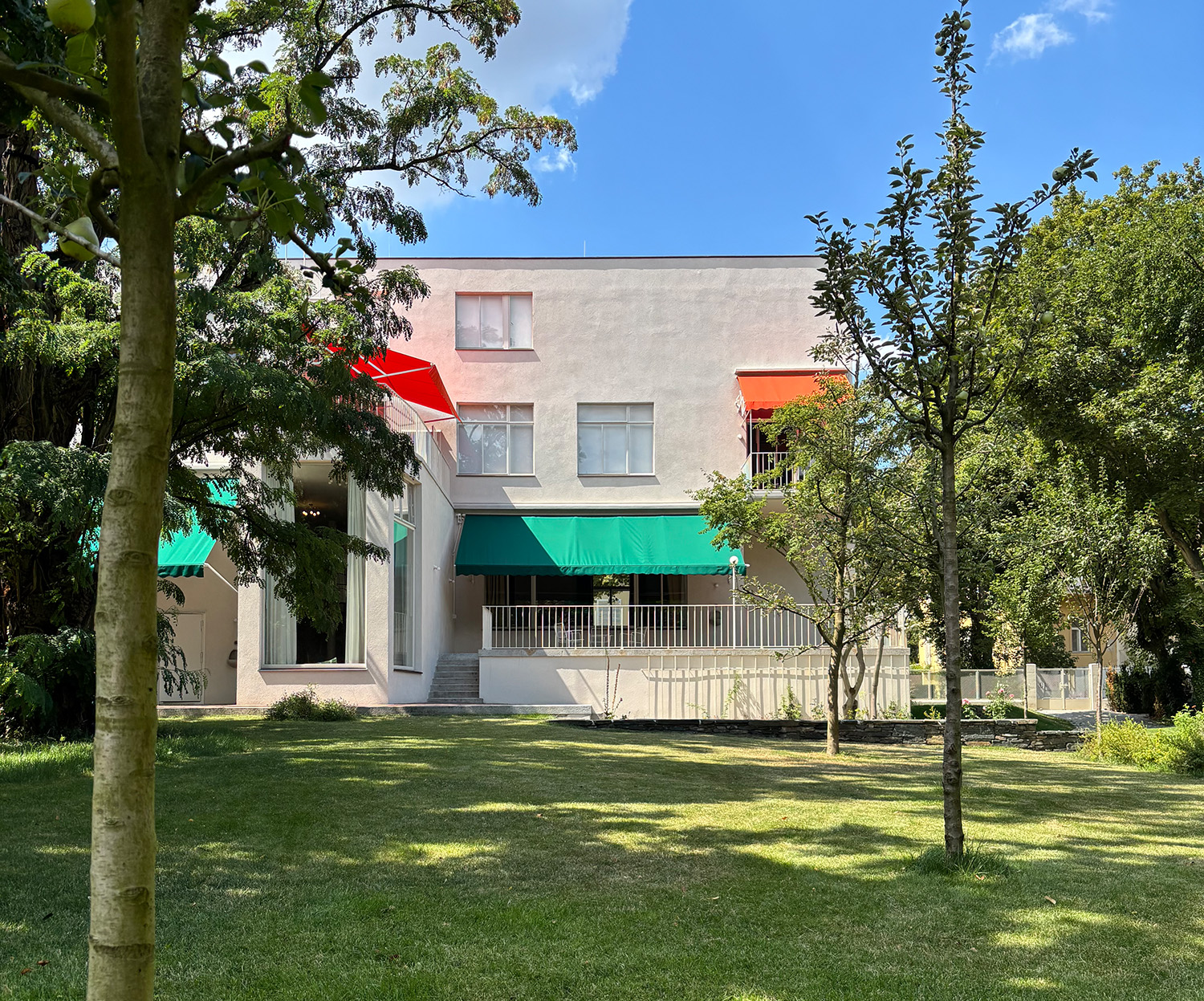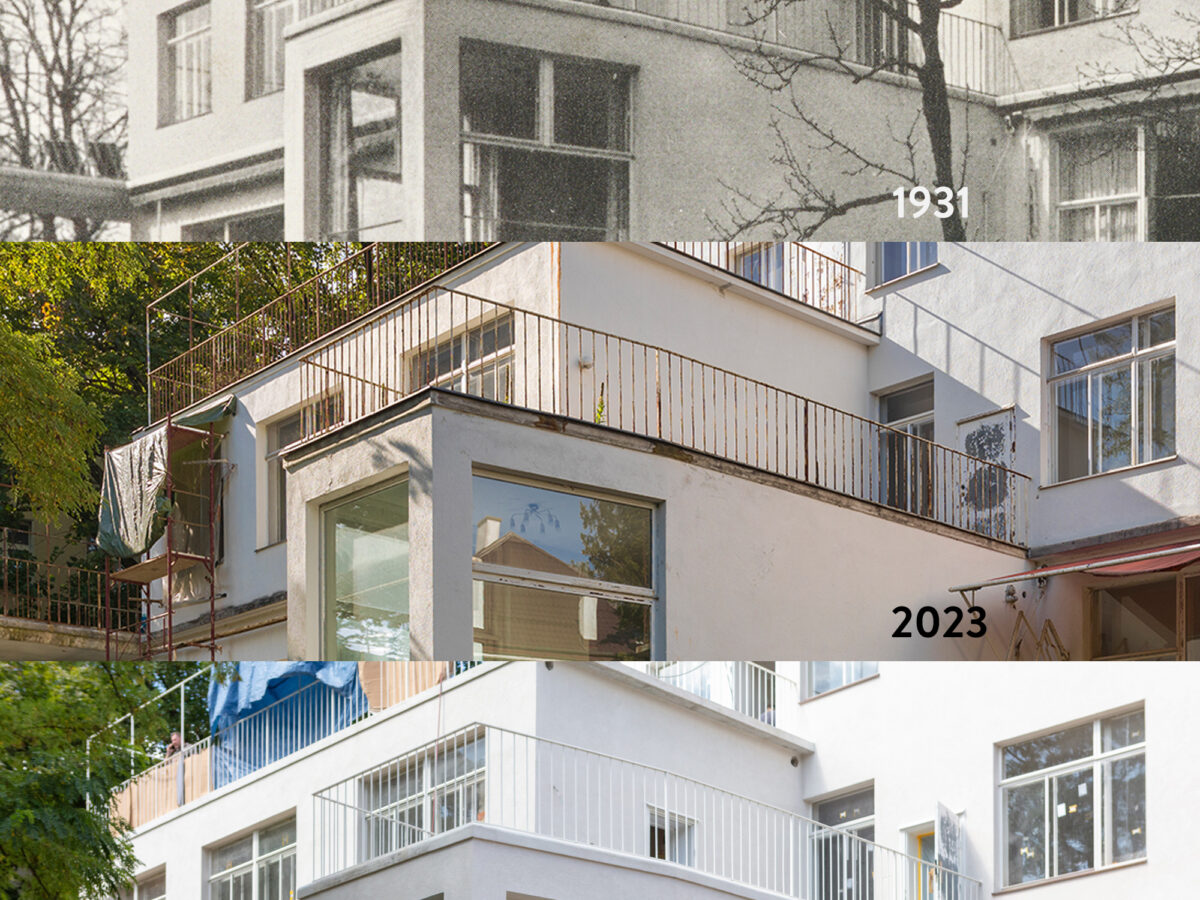
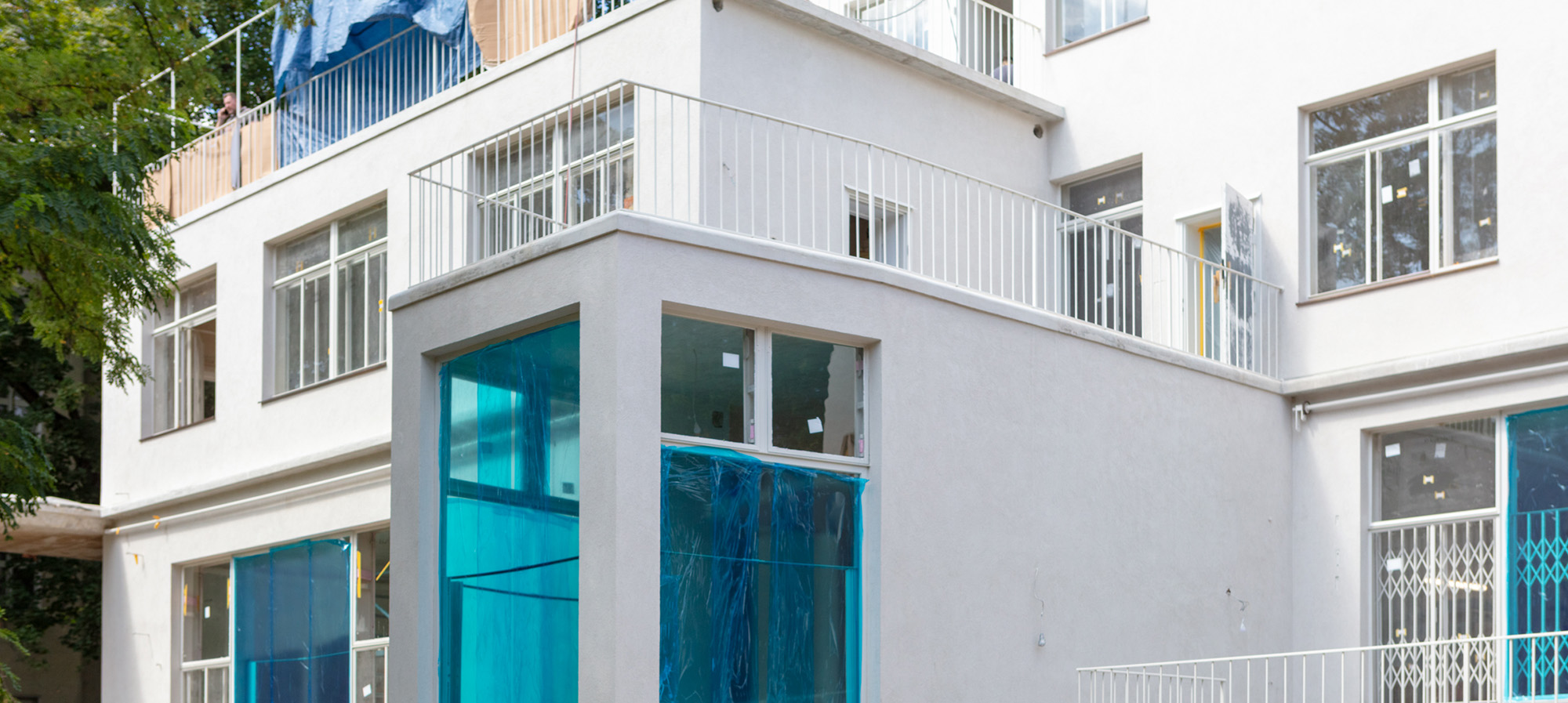
Ein auffälliges Detail der Fassadenansicht sind die Einfassungen der Balkone und Terrassen aus Kunststein. Vor allem auf der Gartenseite zieht sich diese Einfassung wie ein Band über die ganze Fassade und dient zum Teil als Abgrenzung und zum Teil als Vordach für die Markisen. Dieses „Band“ gliedert die Fassade, ist aber gleichzeitig sehr funktional.
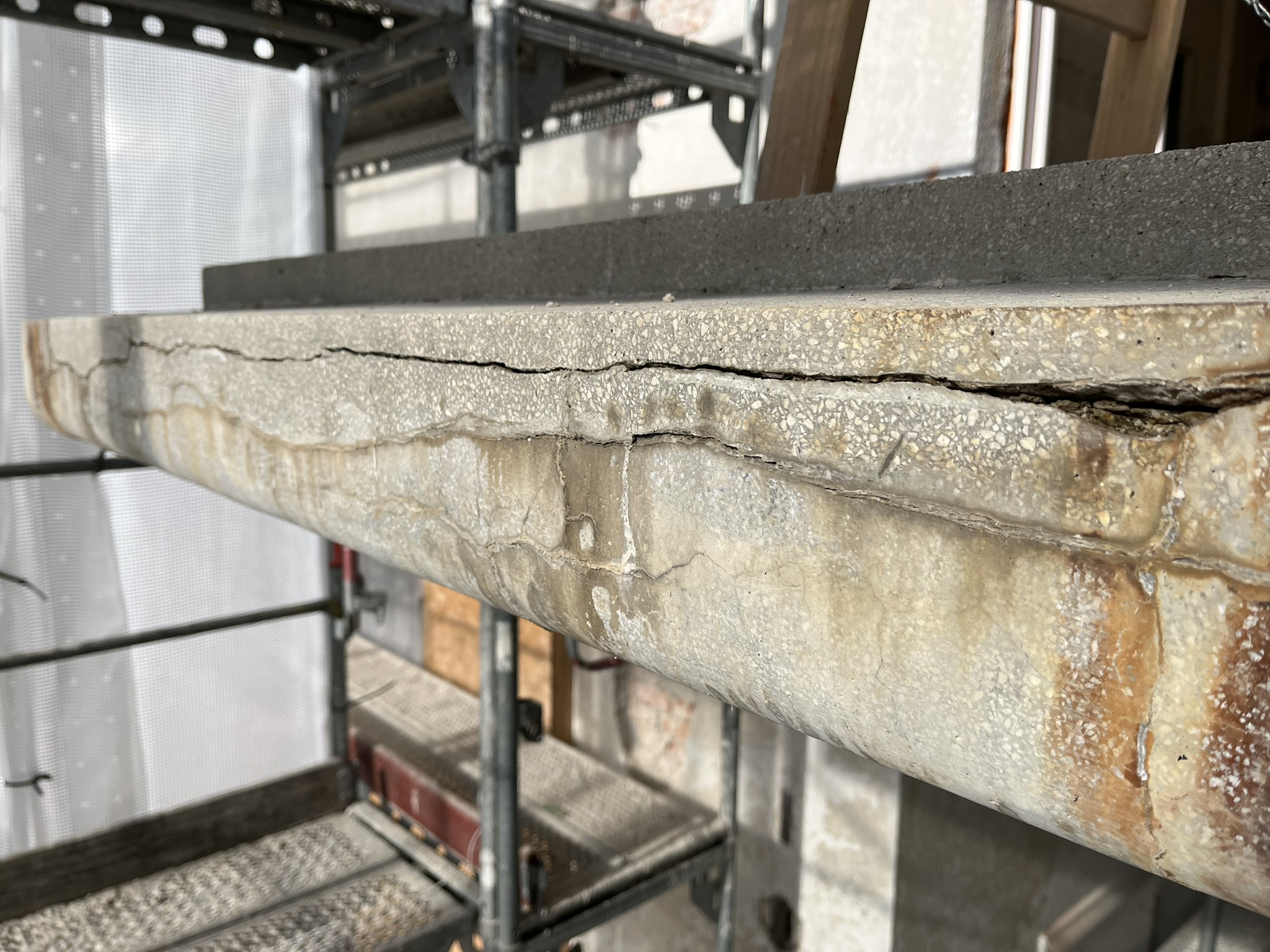
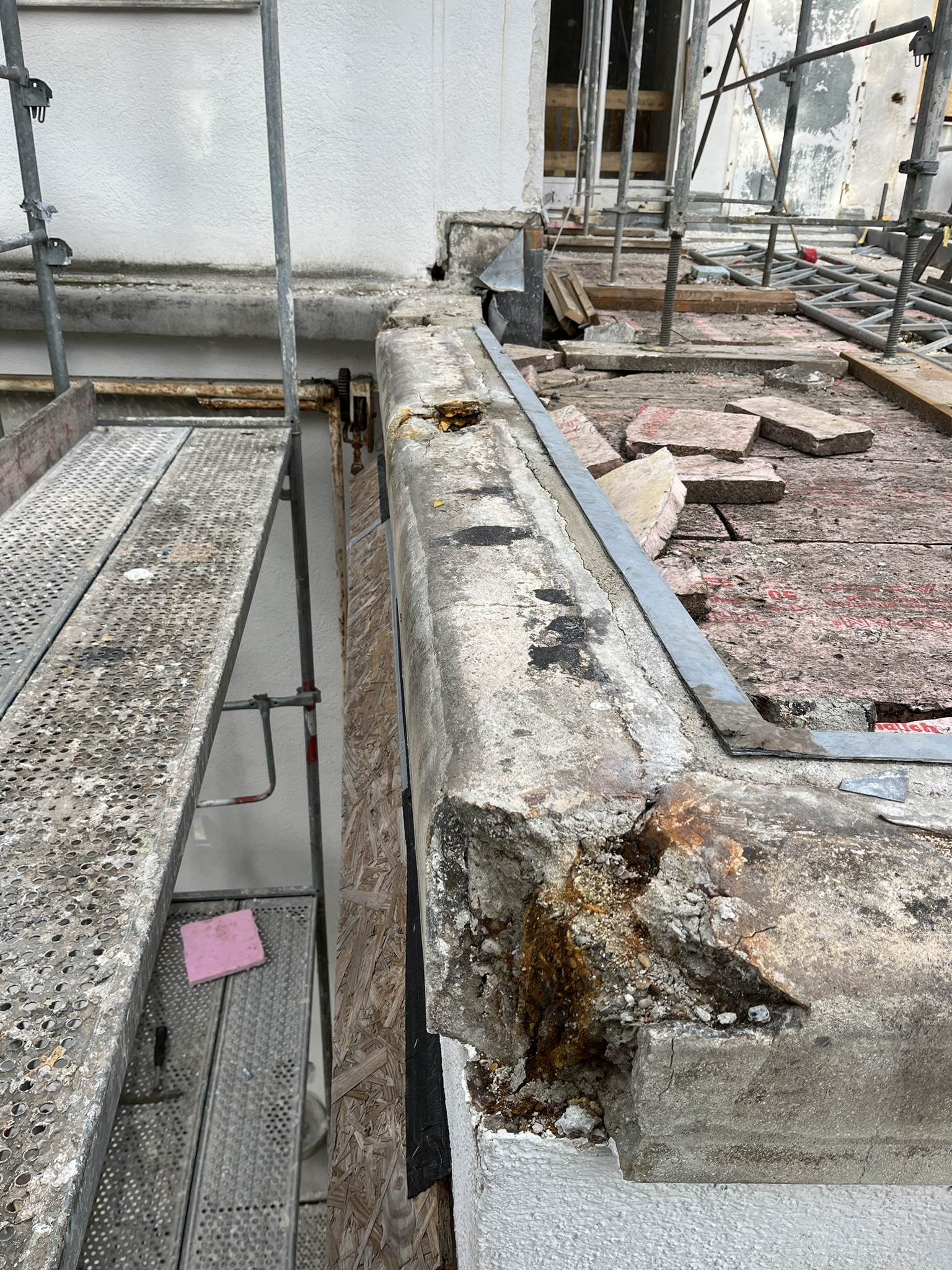
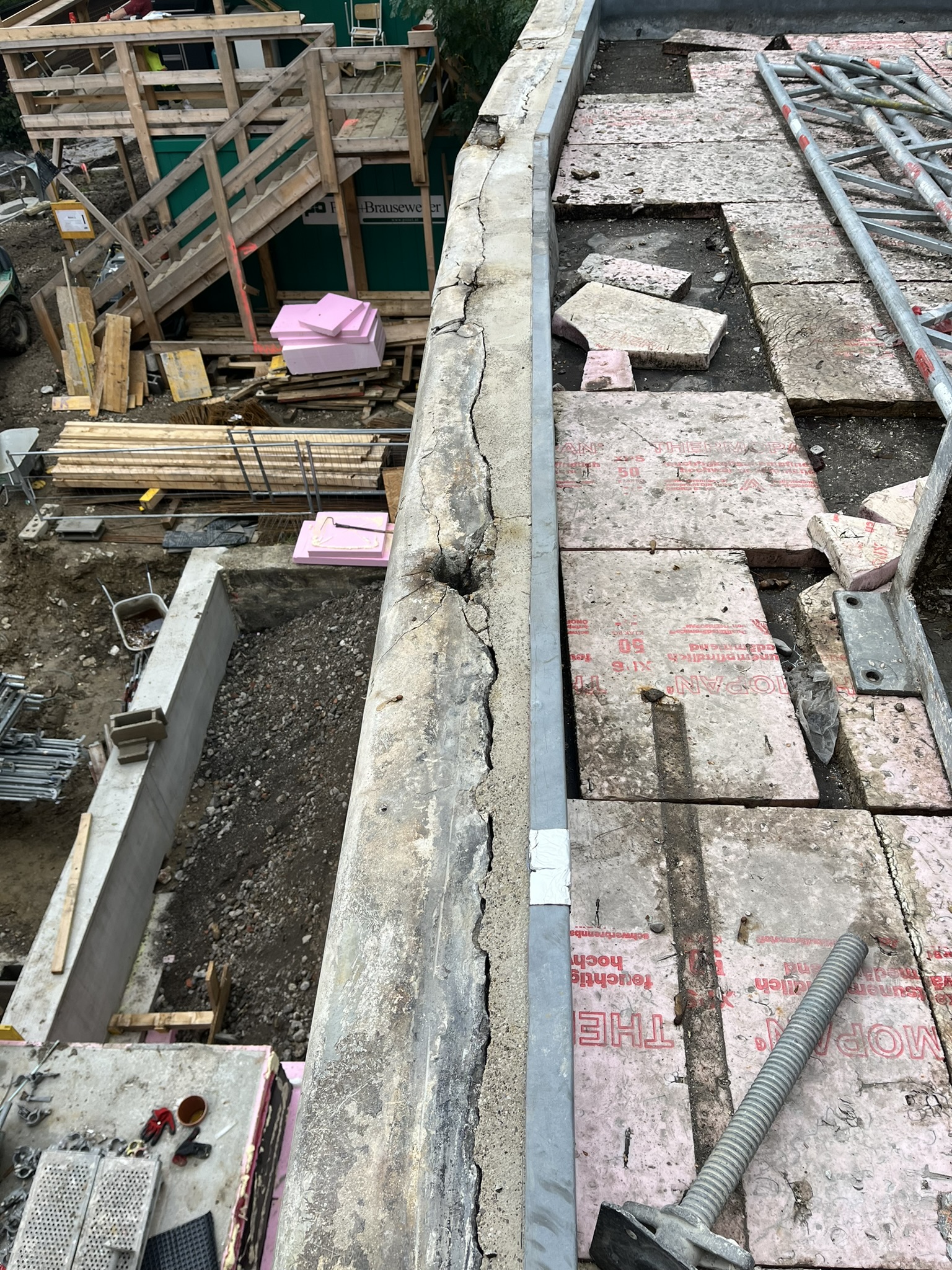
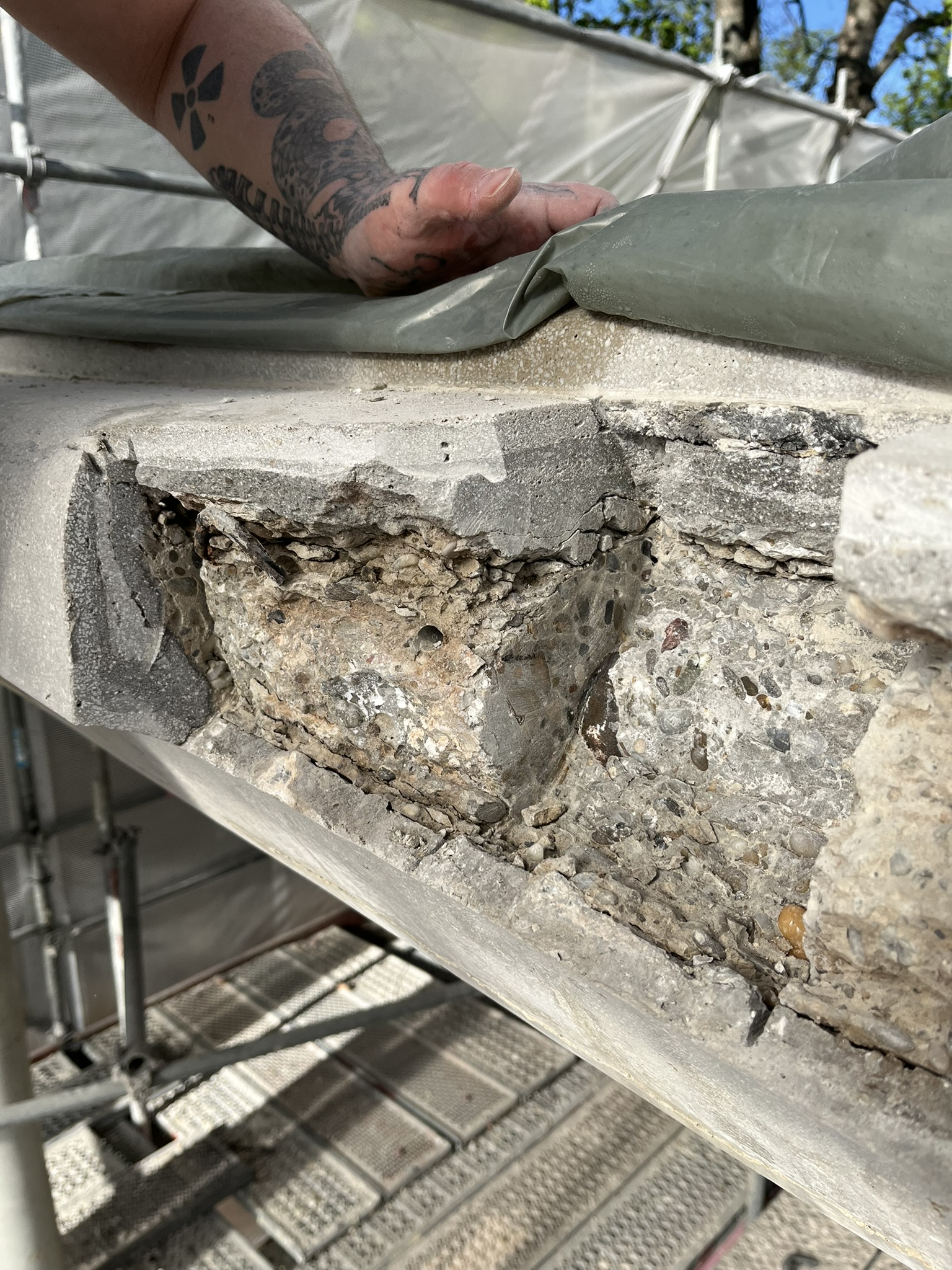
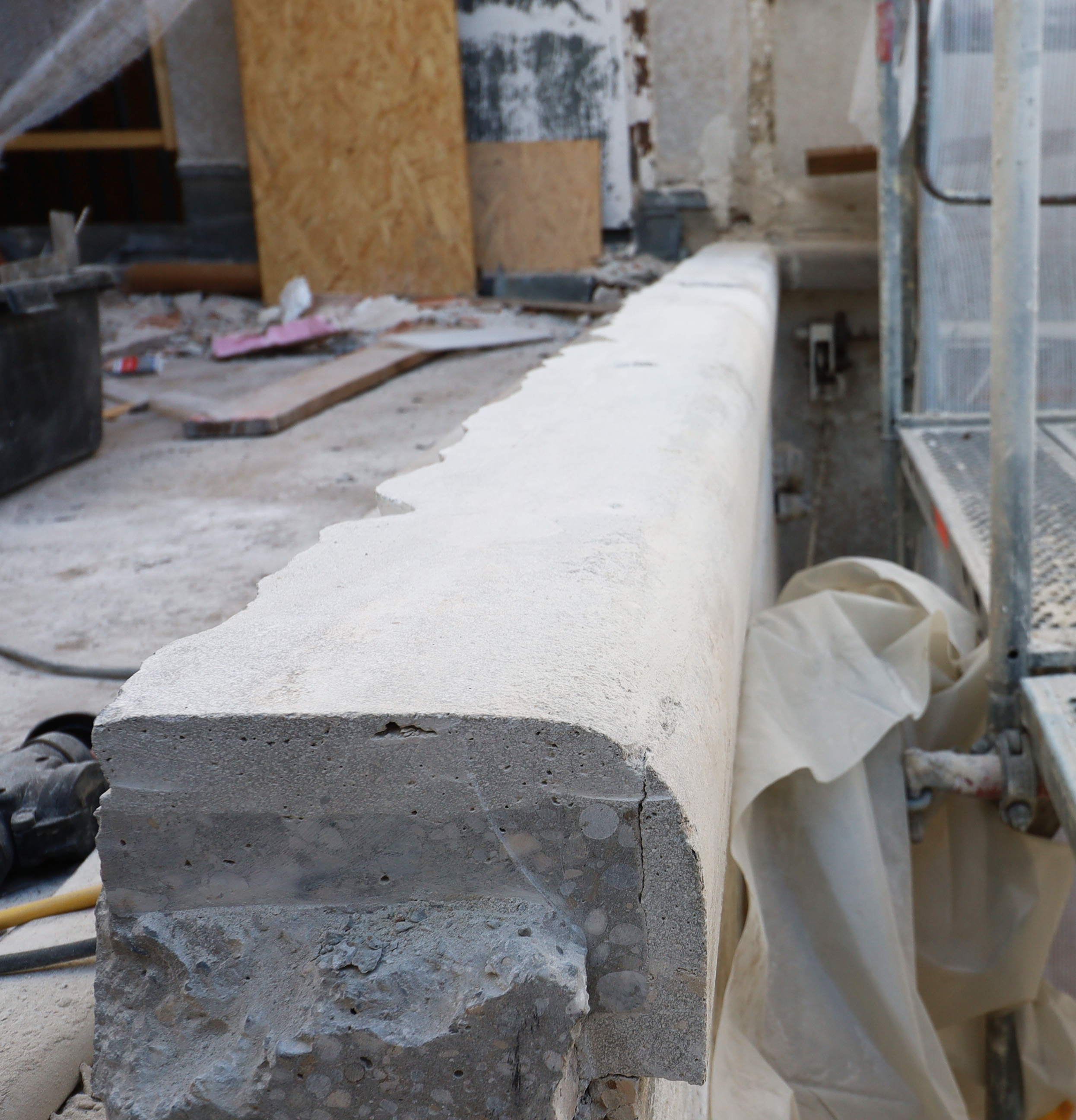
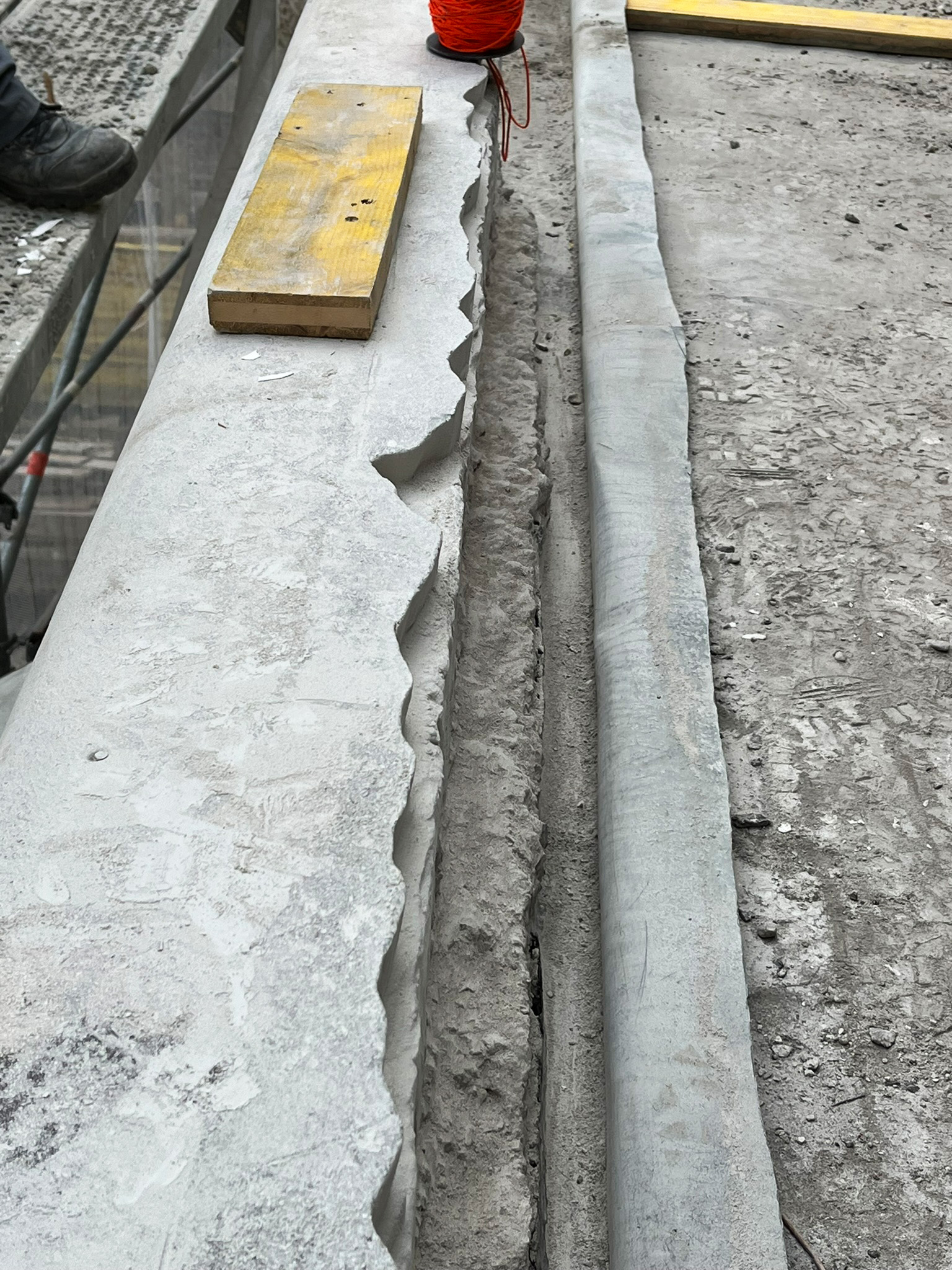
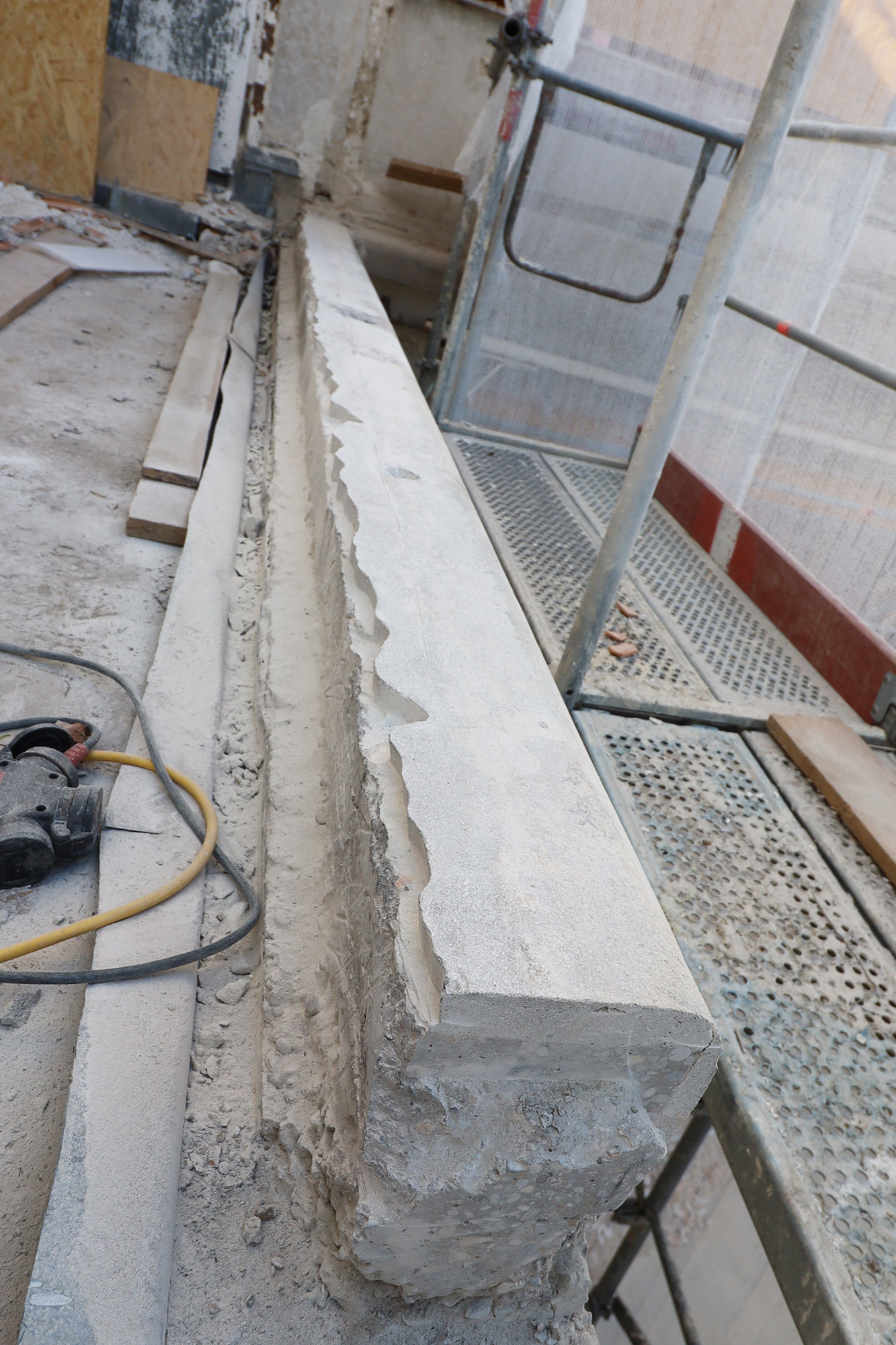
Diese schöne Idee war aber eines jener Dinge, die technisch 1929 nicht ausreichend gut gelöst werden konnten, was zu einer sehr starken Beschädigung geführt hat. Mehrere Sanierungen in den letzten 30 Jahren und teilweise Veränderungen durch einen Überzug aus Blech und Kunststoff konnten das Problem der Wasserführung nicht lösen und waren letztlich auch sehr unansehnlich.
Durch die Sanierung des Bodenaufbaues der Terrassen und neuen Materialien zur Abdichtung, hoffen wir dieses Problem nun dauerhaft gelöst zu haben.
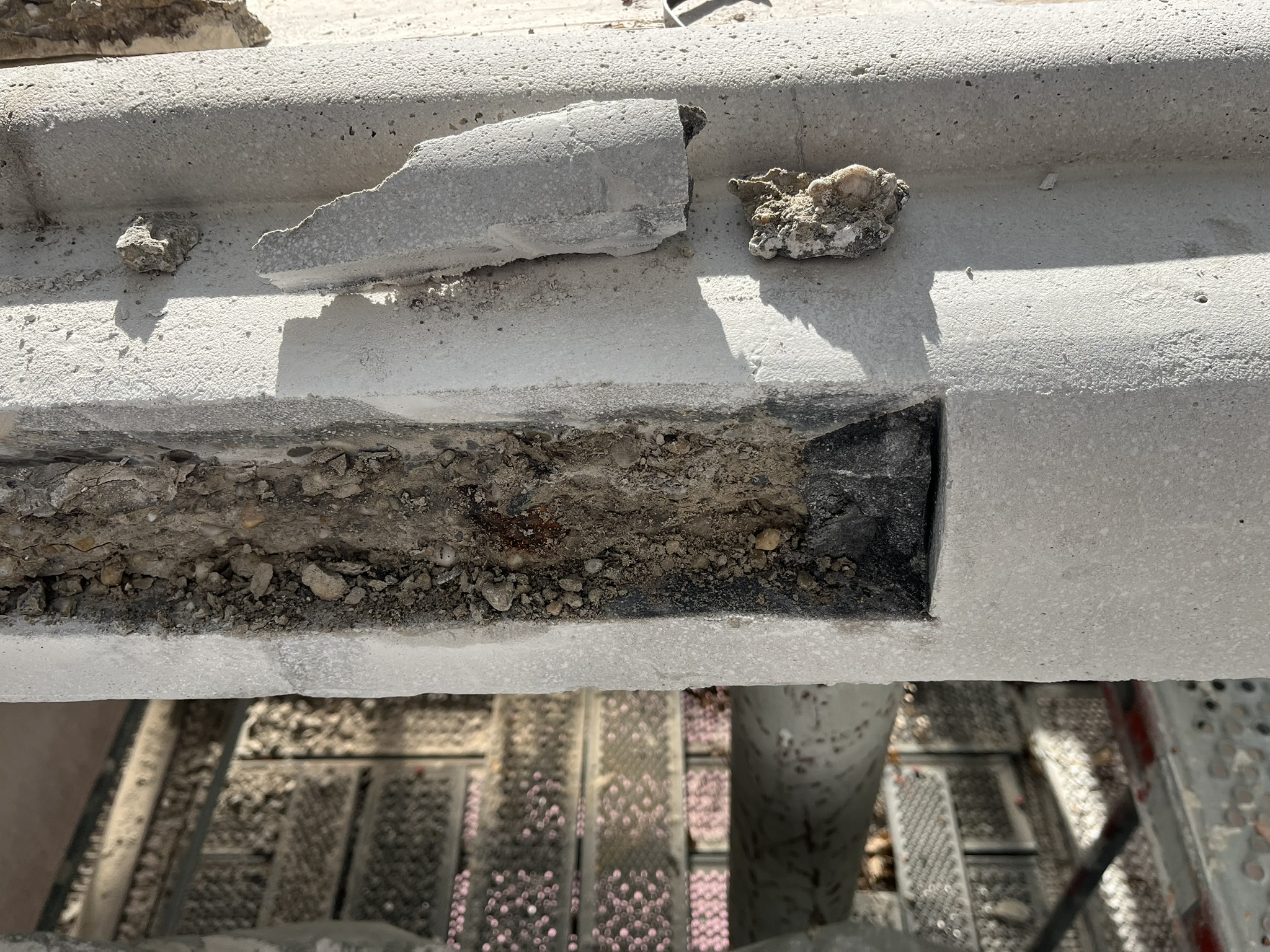
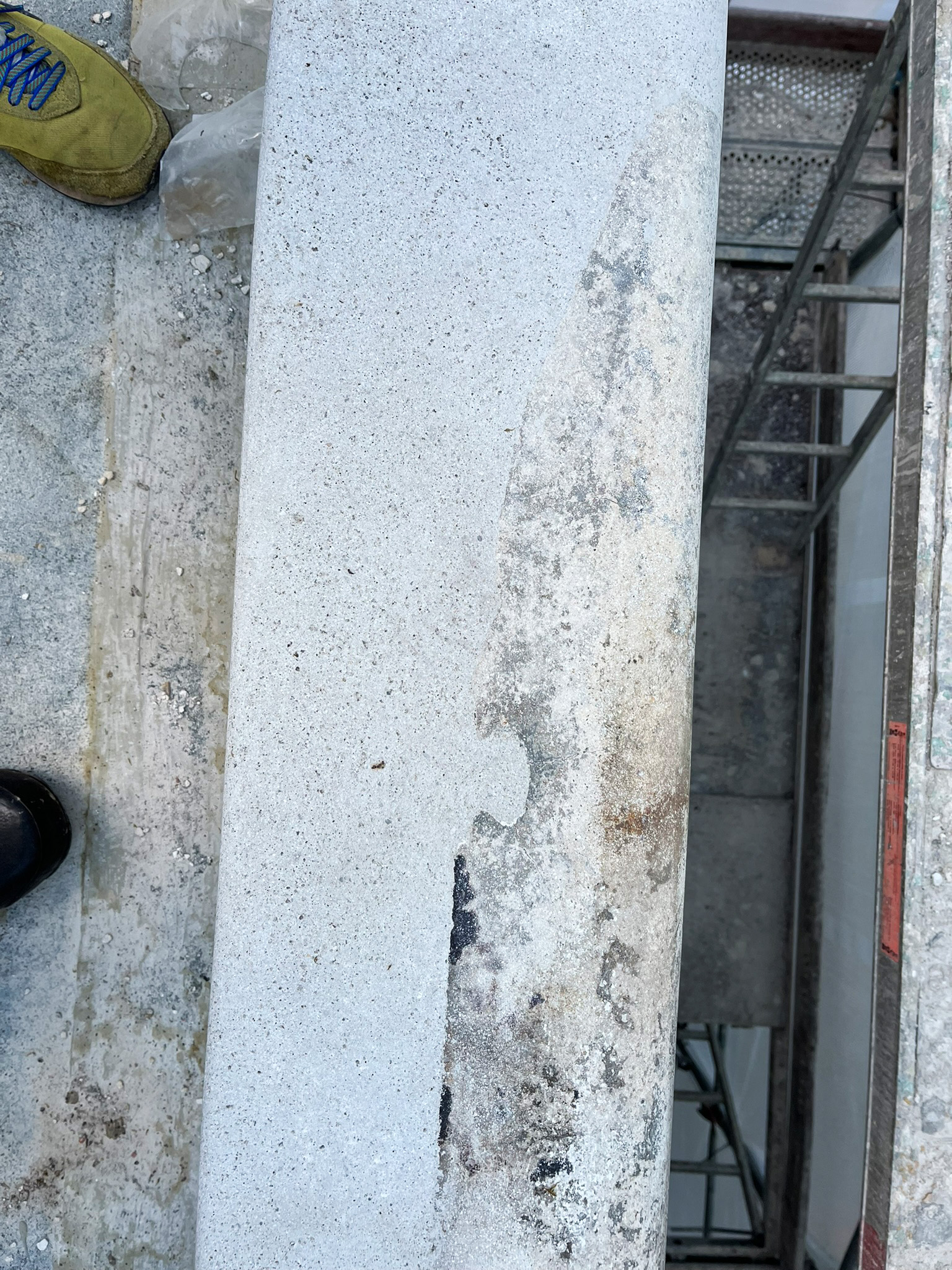
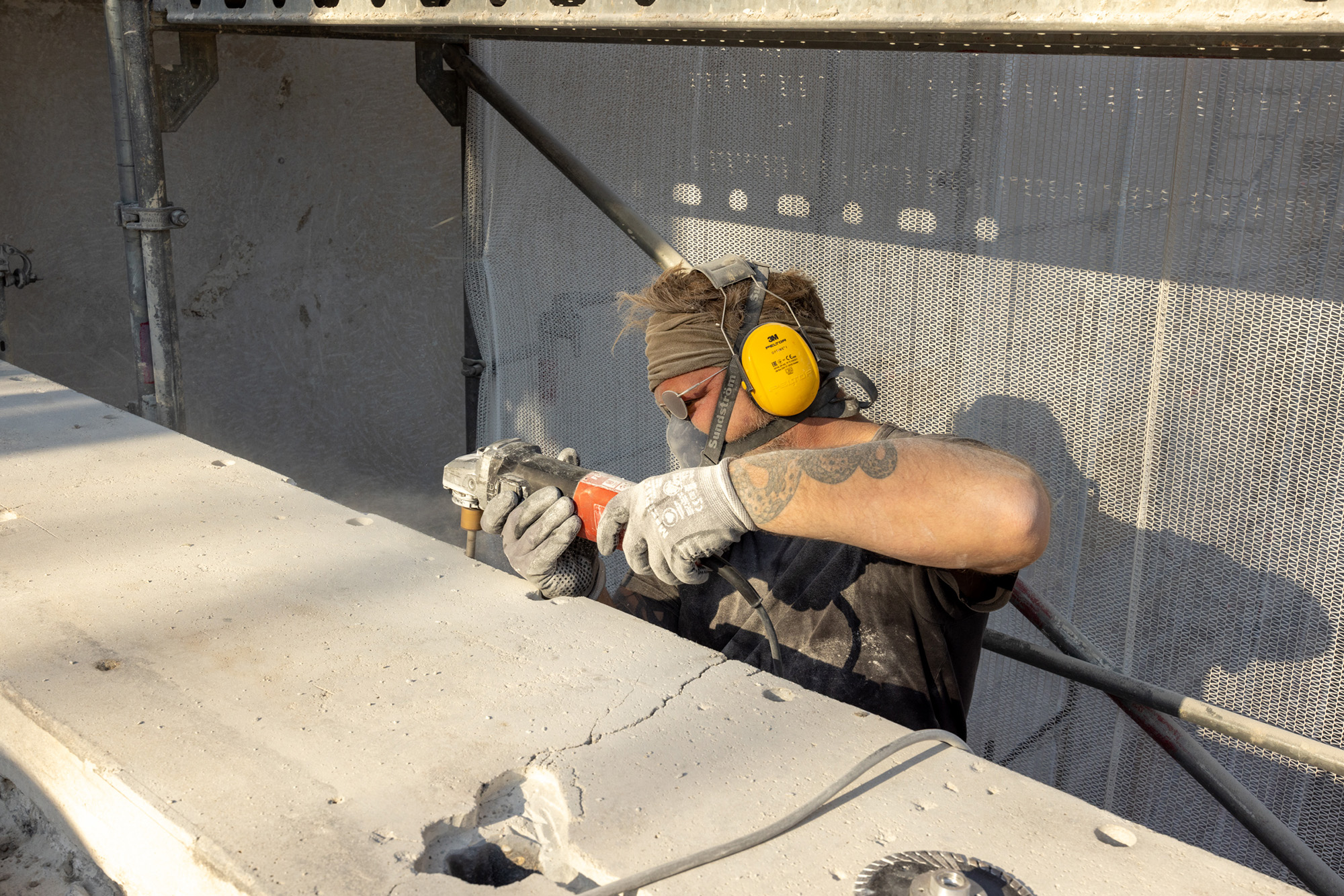
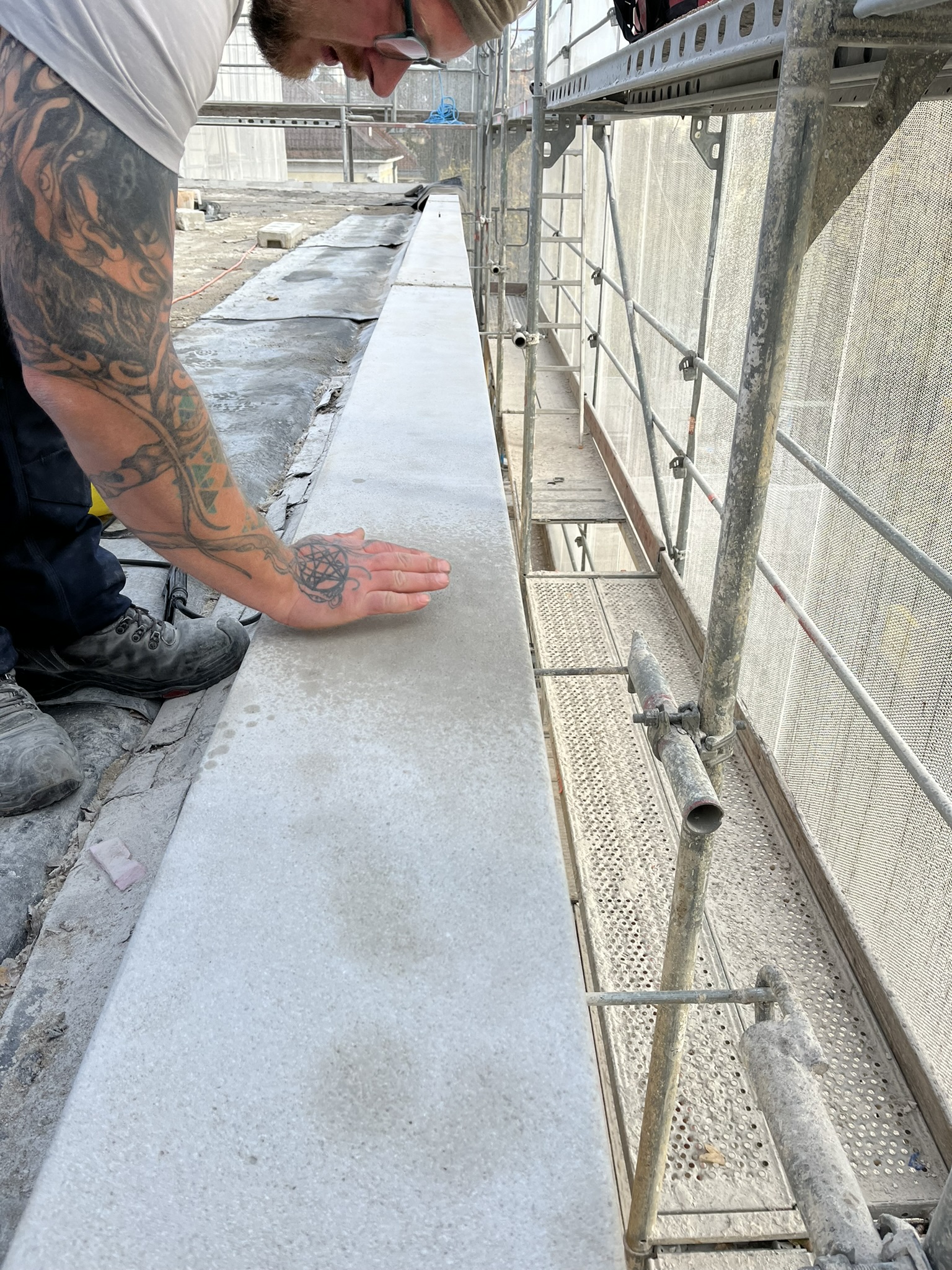
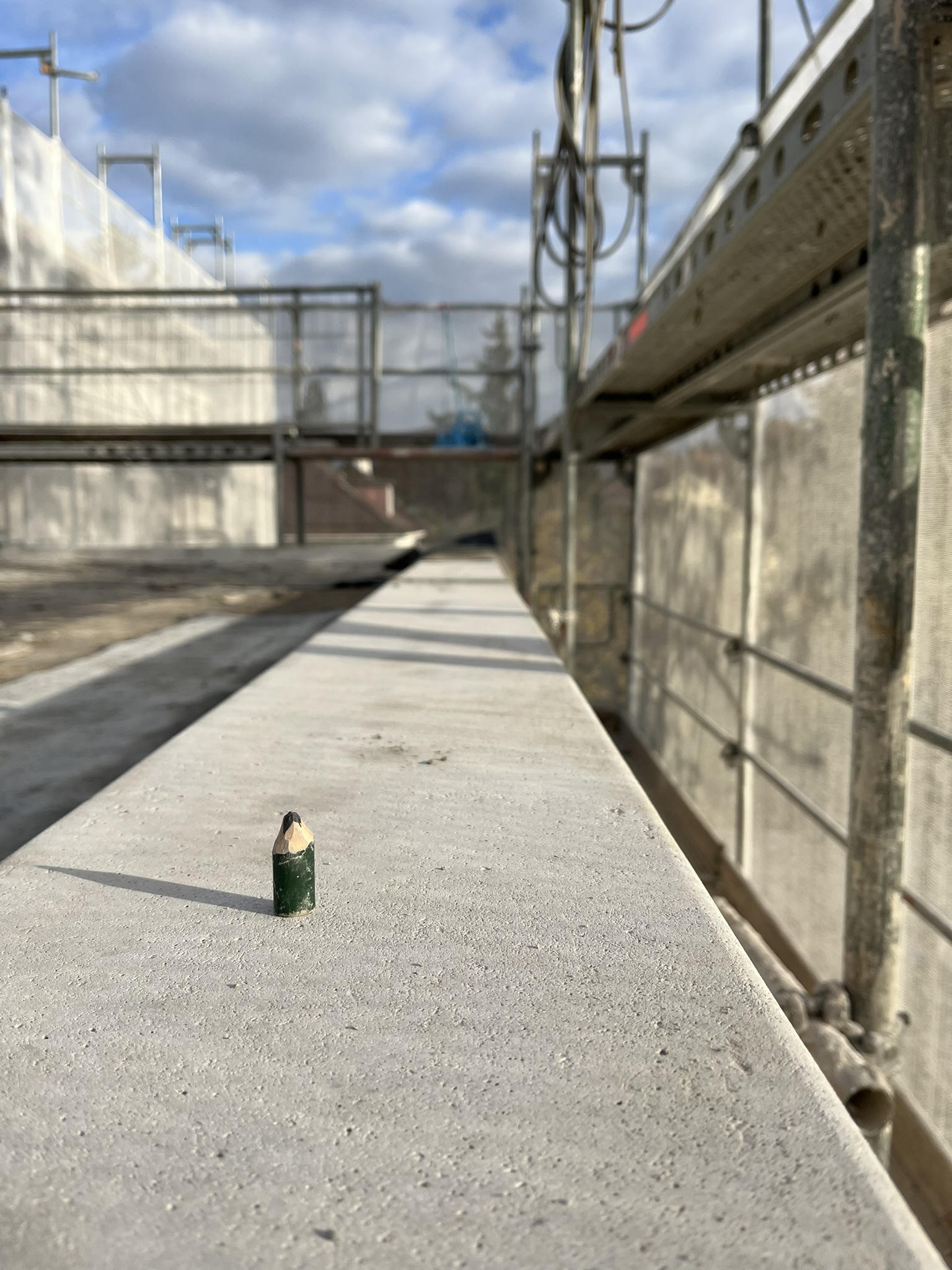
Gleichzeitig wurde der beschädigte Kunststein saniert und fehlende Teile nachgegossen. Zum Glück waren an allen Stellen noch so viele Reste übrig, dass unser Steinrestaurator Firma Pliessnig alle Formen gut übernehmen und so das schöne Band wieder in seiner ursprünglichen Form und Funktion herstellen konnte.
Die Kunststeinelemente an der Straßenseite – der Torbogen, der französische Balkon und die Einfassung des runden Fensters folgen demnächst.
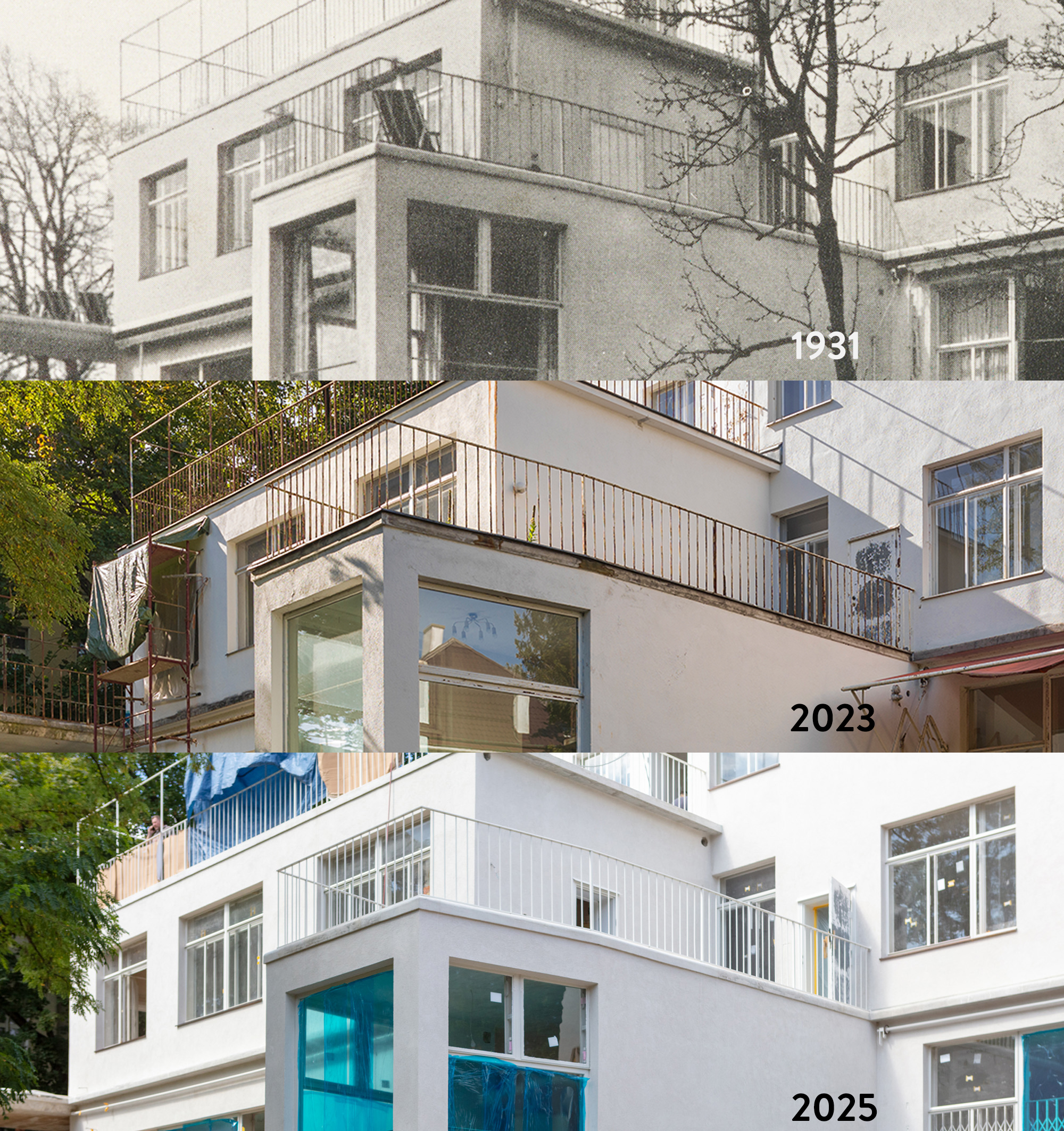
Artificial Stone Cladding
A striking detail of the façade is the artificial stone cladding around the balconies and terraces. On the garden side in particular, this cladding runs like a ribbon across the entire façade, serving partly as a boundary and partly as a canopy for the awnings. This “ribbon” structures the façade, but is also highly functional.
However, this beautiful idea was one of those things that could not be adequately solved technically in 1929, which led to very severe damage. Several restorations over the last 30 years and partial changes involving a coating of sheet metal and plastic failed to solve the problem of water drainage and were ultimately also very unappealing.
By restoring the floor structure of the terraces and using new sealing materials, we hope to have solved this problem permanently.
At the same time, the damaged artificial stone was restored and missing parts were recast. Fortunately, there were still enough remnants left in all places that our stone restorer, the company Pliessnig, was able to reproduce all the shapes well and thus restore the beautiful band to its original form and function.
The artificial stone elements on the street side—the archway, the French balcony, and the frame of the round window—will follow shortly.